Inside the Ring: The Little-Known Medical Specialty Safeguarding Combat Sports
There is a certain allure to the violence, technicality, and utter physicality of combat sports. Understandably, with the rise of the UFC, Mixed Martial Arts (MMA) has hit the mainstream, attracting fans from all over the world. Yet, controversy has plagued the sport from its early days as “Vale Tudo,” a no-rules Brazilian proto-MMA fighting competition, to the highly-structured ruleset of the UFC and similar organizations. It is with the modernization and popularization of MMA that ringside physicians have played an increasingly crucial role in the sport. I set out to understand how an individual who has dedicated their life to healing others could become entangled in what is oftentimes termed “the most violent sport in the world.”
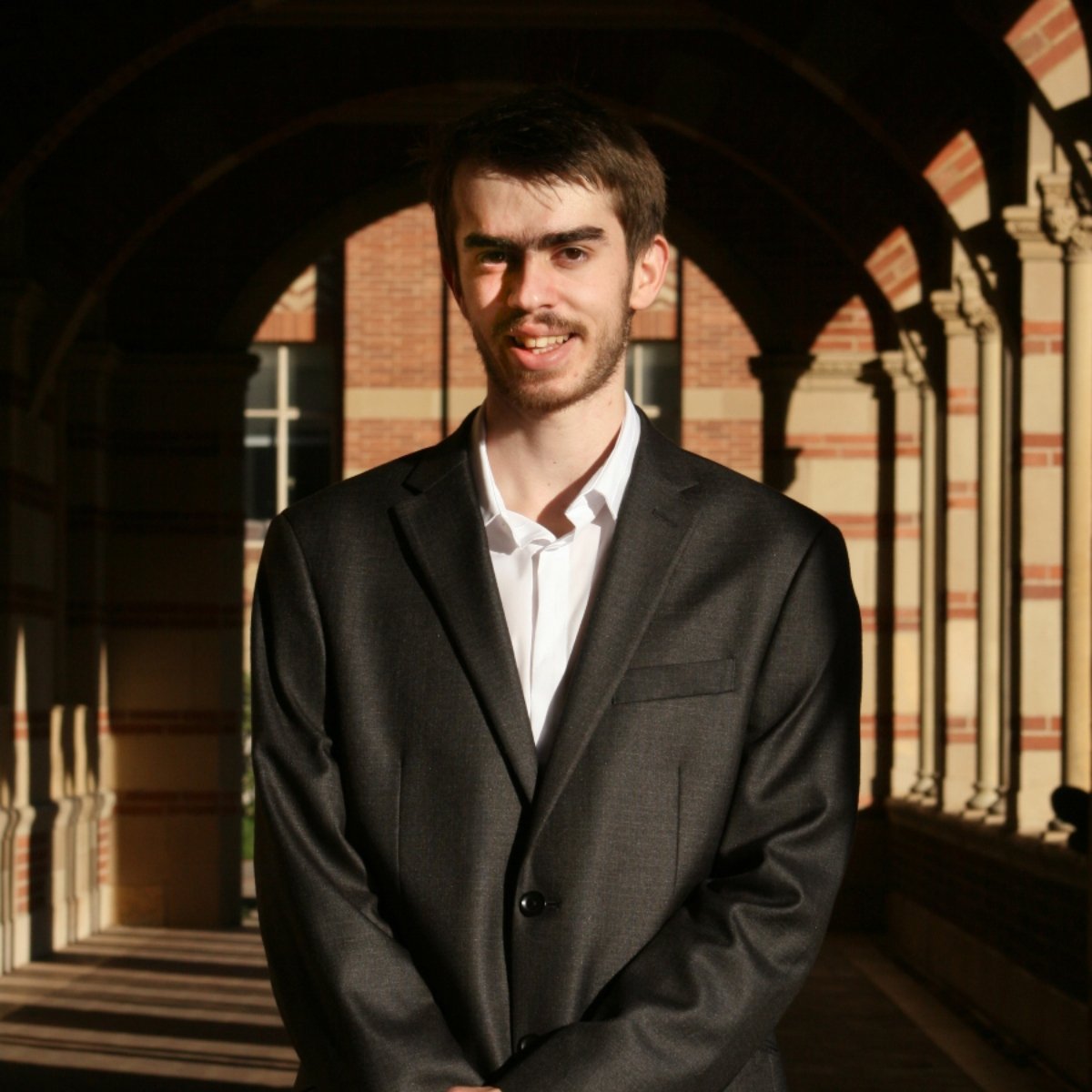
I began my journey with someone who has walked on the same ground, has taken the same classes, and has even studied the same major as me. Long before he was a UCLA pre-med, Dr. Nick Ghazarian was a martial arts practitioner. Starting at the age of five, Dr. Ghazarian trained in various combat styles, later falling in love with MMA and following the UFC from the time of its creation. UCLA was, however, the breeding ground for Dr. Ghazarian’s love for combat sports and his passion for medicine. He went on to pursue a medical education in orthopedic surgery, and now specializes in minimally invasive spine surgeries. When I asked Dr. Ghazarian why he decided to pursue ringside medicine, he recalled, “One of the first things that drew me to be a ringside physician is I got to train alongside fighters.” He went on to describe his role as a ringside physician in various amateur and professional organizations as “a lot of fun.” Dr. Ghazarian was “seeing the fighters before the fight, during the fight, and after the fight,” a unique, front-row experience, but also a grueling, weekend-consuming line of work.
Much like Dr. Ghazarian, and like myself (and maybe even you), Dr. Adam Saby, who specializes in PM&R (physical medicine and rehabilitation), was a pre-med undergraduate at UCLA. However, his journey into the world of medicine only began midway through his undergraduate education. Dr. Saby told me, “I had an interest in science, but after working in a lab, I realized that it was missing something. Working on agar plates and DNA electrophoresis just didn’t give me much satisfaction.” Dr. Saby went on to volunteer at a free clinic in South Central Los Angeles (UMMA Clinic), and it was there that he found his interest in medicine. Several years later, his path to becoming a doctor was nearly subverted as a first-year medical student at UCLA, “I don't want to say drop out of med school, but essentially pursue something that I thought was a lot more interesting, which is working for a [MMA] promotion that was based out of San Jose called Strikeforce.” Yet, in a sudden turn of events, Dr. Saby’s job application to Strikeforce was returned with a link to the UFC’s job application portal: the parent company of the UFC had purchased Strikeforce in 2011. Dr. Saby went on to finish UCLA medical school, completed his residency at the VA Greater Los Angeles Healthcare System, and now practices and teaches medicine at UCLA.
What exactly does a ringside physician do? According to both Dr. Ghazarian and Dr. Saby, doctors at combat sport events observe fighters for repetitive head trauma, nasal fractures, lacerations around the eye, bleeding, knee injuries, shoulder dislocations, and so much more. However, what sets apart a ringside physician from just any other doctor is the quick judgment calls that are needed in boxing and MMA bouts. The decision to tell the referee to stop a fight, send a fighter to the ER after the competition, or even prevent a fighter from entering the ring or the octagon lies mostly in the hands of the ringside physician. Any measure taken by the doctor is intended to prevent long-term or life-altering injuries (of course, temporary injuries are inevitable in combat sports). Although Dr. Ghazarian hardly recalls calling off a bout, he does remember actively assessing fighters, especially in one particularly peculiar situation.
When I prompted Dr. Ghazarian to discuss some of the ethics involved in this unique discipline, he told me a small anecdote about one competitor, “After the fight, the fighter was putting on a little bit more of a show than I thought was necessary for the injuries he sustained. And so, I was essentially telling everybody he’s okay. He didn’t think he was fine.” Dr. Ghazarian stood firm by his assessment, and went on to explain that although the crowd may be loud and the fighters may, at times, be even louder, it is important to trust your own medical training and experience in these high-stress moments. “You may get pressure from either side, but in the end, you have to make the right call and do whatever you can in the interests of the health of the fighter.”
Dr. Ghazarian also emphasized that not all events carry the same level of difficulty. In fact, he noted that serving as a ringside physician at amateur events can be significantly more challenging than at professional bouts. Amateur fighters, he explained, are often more prone to serious injuries, and their corners may lack the experience needed to recognize when a fight should be stopped. These factors, combined with the variability in skill and preparation at the amateur level, can make medical decision-making even more demanding and require heightened vigilance from ringside physicians.
Dr. Adam Saby had told me a story of his own, that I am going to relay to you in his words, as I had found it particularly enlightening on the thought process of someone who works directly with these fighters. “I remember an amateur fight actually. It was an amateur MMA fight [and] the bell had rung. The round was complete, but I felt that the fighter wasn't fighting to his full capacity. I was sent in to determine if he could continue because he had essentially been saved by the bell. I did a sensory cognitive assessment. I just basically checked his orientation to time, person, place, and event, which is like, ‘What is your name? State where you are.’ But he couldn't tell me where he was and where this event was happening. I kind of had a good feeling that at that point, there's probably no need to continue. This man is concussed. And that was the end of the fight there.”
Evidently, by the end of both of these interviews I had come to the understanding that there is actually no direct conflict between a sport where competitors aim to injure each other and a career where individuals dedicate their lives to treating injuries and diseases. Instead, it had become clear that these two vocations actually go hand-in-hand. Even more so, as an MMA fan and pre-med with a deep passion for medicine, I have gained a personal interest in ringside medicine as a potential side job in the near future. Dr. Ghazarian and Dr. Saby had so convincingly allayed my qualms about ringside medicine that I decided to ask them how a pre-med, like myself (and if my article was so inspiring, then maybe even you), becomes a ringside doctor.
Aside from the well-known research, volunteering, and other pre-med activities that both ringside physicians had participated in during their time as undergraduates at UCLA, they emphasized the need to have a genuine love for combat sports and medicine as the greatest prerequisite to pursuing ringside medicine. Dr. Ghazarian told me it is best that an interested pre-med or medical student “have some understanding of [any combat] sport, some passion in the sport,” but “does not have to necessarily train [in that sport].” Moreover, a strong foundation in musculoskeletal medicine, physiology, and oftentimes a relevant specialty, such as PM&R, Orthopedics, family medicine, or sports medicine are all highly sought after. Still, licensed physicians not specializing in pain or musculoskeletal medicine can take part in ringside medicine with adequate training and understanding of the sport and the body. For example, Dr. Saby’s mentor, Dr. Paul Wallace, specializes in dermatology, but is also the Chief Ringside Physician for the California State Athletic Commission. Ultimately, Dr. Saby thinks, “once you're in the door of med school, all the options start to open up,” and reaching out to amateur combat sports organizations and their respective ringside doctors in search of shadowing or physician’s assistant opportunities is a great entry point for medical students.
This journey did not take me far (I had done all of my “investigative journalism” at my desk), but it did take me into a world rarely talked about, a world that is still battling misconceptions and misportrayals, and a world that is just as valuable to competitive sports as any referee, player, or coach may be. It is medicine that takes place outside of a hospital (perhaps, for some, the ring can even be the antithesis to the hospital). Dr. Nick Ghazarian believes that “there’s no specific specialty that really trains you for this.” Dr. Adam Saby agrees, “Ringside medicine is its own, essentially, specialization that needs to be learned.” If someone were to ask me to describe ringside medicine in five words, I would have to go with Dr. Saby’s response: “There's nothing really much like it.”
For more information about Dr. Nick Ghazarian, please visit Dr. Nick Ghazarian | Precision Spine and Orthopedics, Dr. Nick Ghazarian | Linkedin, and Dr. Nick Ghazarian | Dignity Health
For more information about Dr. Adam Saby, please visit, Dr. Adam H. Saby | UCLA Health, Dr. Adam H. Saby | Linkedin, and Dr. A.H. Saby | About Me