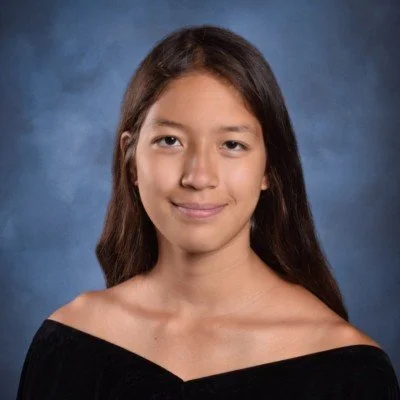
Interview with Malvika Iyer, Editor-In-Chief of UCLA's Undergraduate Science Journal
Did you know that UCLA has its own peer-reviewed, student-run academic journal that publishes undergraduate research across all STEM fields? The Undergraduate Science Journal, known as USJ, was established in 1986 and continues to highlight student authors’ scientific research, providing them with the opportunity to engage in the scientific publishing process.
Members of its three boards—Review, Editorial, and Layout—work throughout the fall and winter quarter to review submitted manuscripts, provide feedback, ensure scientific integrity, format and polish articles for print, and finally, publish the finished product in the early spring quarter. Overseeing this complex, multi-step process is Malvika Iyer, one of the Editors-in-Chief (EICs) for USJ’s 39th volume.
Iyer is a senior at UCLA, graduating in June 2026 with a major in Molecular, Cellular, and Developmental Biology (MCDB) and a minor in Bioinformatics. She plans to continue her education at graduate school and begin a career in research. I talked to Iyer about her journey at USJ, starting as a general board member in her freshman year and ascending the leadership ladder to become EIC.
Coming into UCLA, Iyer had set a goal for herself to improve her scientific writing skills, which she knew would be critical in a research career; she even wrote her Personal Insight Questions about the importance of scientific communication. Searching for clubs on campus, USJ was one of the first student organizations Iyer came across. After attending the interest meetings and coffee chats with board members, Iyer was convinced to join, commenting that all members “seemed super impressive, smart, and involved in research.”
She started out as a general member of the Review Board, which is responsible for reading the research papers submitted to USJ and evaluating their scientific integrity, coherence, and many other aspects; ultimately, this role decides whether or not a paper will be published in the journal. Because Review Board members receive only a brief 2-week training before diving into the review process, which takes about 4-5 hours per week throughout the fall and winter quarters, Iyer was initially overwhelmed by the workload and didn’t even consider the possibility of a leadership position.
However, her managing editor (ME) encouraged Iyer to apply to become an assistant managing editor (AME) in her sophomore year. As an AME, Iyer led a team of general board members that worked together to review 2-3 submitted papers, discussing their evaluations of each paper and coming to a final decision on its acceptance. On the Review Board, AMEs are responsible for writing long, detailed letters to the student authors letting them know of USJ’s decision. If a paper is accepted pending major edits, which occurs very often, they also provide extremely specific feedback, allowing the author to begin revising their work before the Editorial Board takes over. Iyer said that being an AME really allows you to “get into the weeds” of a paper, not only teaching you “how to think critically about scientific articles” but also encouraging “big picture thinking about the entire paper,” skills that are broadly applicable outside of USJ and useful when writing your own research or applying to grad school.
In contrast, managing editors (MEs) have a more guiding role, supervising the entire board and ensuring that every group is on track to complete their work by USJ’s strict deadlines. ME was Iyer’s favorite position at USJ because she felt that she could “get close to all the members” and “make [her] mark on the board.” There’s also “a big sense of accomplishment,” Iyer says, when you’re able to “see the articles through” from the beginning of review to the editorial handoff.
Similarly managerial in nature is the EIC role, which is even more hands-off and high-level. This makes it harder to connect with new members; however, EICs have the unique opportunity to shape USJ’s focus, based on the issues they have seen in the past. Again, Iyer noted that this role emphasizes big-picture thinking, which she believes is “super foundational” and “dictates your success in grad school and beyond.”
All USJ members, regardless of their role, find great success after graduation using the skills they developed at the journal. Iyer advises that whether you should take a leadership position depends on what you’re looking to do in the club. If you are interested in analyzing scientific writing and closely examining research papers, you can most easily do so as a general board member or AME. The “ME and EIC positions are less hands-on, but you get to see how everything comes together,” making them well-suited for people who like teaching and developing curricula.
Working at USJ has certainly been influential for Iyer, who says that she feels fortunate to have the incredible network of students, researchers, and professors who are involved or supportive of USJ. “The community is really intelligent,” she commented, and “being part of something so well-established is rewarding.”
If you’re intimidated by the prospect of reading research papers, Iyer also has some tips to help you build your scientific literacy. “It’s okay if you're not able to understand everything,” she says, “don’t put pressure on yourself” to understand every little detail. Instead, “understand why the article matters—focus on the results, the discussion, and maybe the abstract/introduction.” After reading those sections, pinpoint the researchers’ driving question, how they answered it, and what the answer was. If you can summarize that information in 3-4 sentences, it “shows you got what you needed out of the article.” With this, “the more you do it, the easier it gets,” so joining organizations like USJ is a great way to get practice!
As a general board member of USJ, I would highly recommend that anyone interested in research apply to join next year’s team. I hope this interview with EIC Malvika Iyer showcased the myriad of opportunities available within the club to develop important scientific and professional skills, and how you can take on different roles in order to tailor your USJ experience to your personal goals.