
Finding My Place in Research: A Guide for Transfers and Beginners at UCLA
Salma Kidwai
As a transfer student, I felt like I was behind in getting involved in research at UCLA. I was overwhelmed, lost, and thought it would be impossible to find a lab that would take me in, especially after applying to over 15 labs and not hearing anything back. However, through trial and error, I was able to secure a position in a lab that aligns with my goals, and I’d like to share my journey with others on how to get started in research. Whether you’re an incoming freshman or transfer student, or are looking to get started, hopefully you can take away a couple of things from this article.
One thing that helped me greatly was taking advantage of the resources from the Undergraduate Research Center. They have articles that go into detail about each step of the research application process and also provide possible labs to get involved in. However, I understand that it can feel overwhelming, so the following list includes things I would recommend completing.
Identify which type of research you want to focus on
Basic science, clinical, applied/translational, or field research
This helps you identify which labs most align with your goals and interests
Create a curriculum vitae or résumé
Be sure to highlight relevant experiences and traits that align with research
If you don’t have experience, no worries at all: just be sure to showcase your interest, willingness to learn, and times you’ve been curious and how you went about understanding something new
Make a list of labs you would be interested in joining
Try to read at least one article or publication from each lab that you find interesting
I’d recommend at least five to eight labs, but more is great too
Create and send a cover letter or email
Include interesting things you learned from the publication you read
Also demonstrate your interest and explain why you’d like to assist with their research
Wait to hear back
Honestly, you probably won’t hear back from 80–90% of the labs, but keep trying
One thing I learned is not to take it personally: there are many ambitious individuals like yourself trying to get their foot in research
You’ve got this, and the lab that is meant for you will reach out
Start preparing for an interview
Be sure to understand your experiences and how to express them in relation to what the research position is looking for
Express your interest and passion for the research
Keep trying until you find a lab
You’ve got this!
“You’re going to get rejections or not hear anything back the majority of the time; however, when you find the lab that is meant for you, it’ll be yours. It might be after 20, 30, or 40 applications, but you’ll never find the lab if you stop trying.”
Here are a list of resources that I found helpful through my own experiences:
Look under the Undergraduate Research Center
They offer lab openings specific to STEM students
They also have research programs and scholarships that can support undergraduate researchers
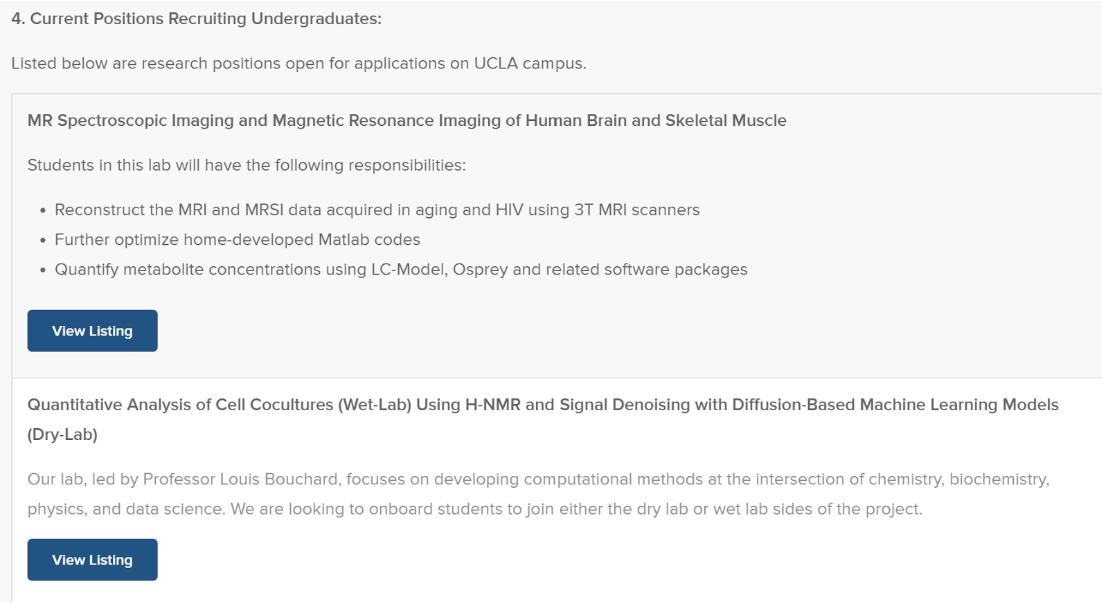
A screenshot of current listings on the UCLA Undergraduate Research website as of December 2025
Look under your major’s Research Practices course
They can sometimes provide a list of labs looking to recruit while also offering course credit
Join clubs that focus on either:
Helping students get involved in research, or
Research clubs themselves
These are both great opportunities to build connections and meet students with similar interests and career plans
Find conferences that are looking for student presenters
You can conduct independent research on a topic of interest and present it. This is a great option if you are unable to find a lab but still want to gain research experience
Another alternative is to look for summer research opportunities and begin applying between December and February, as this is typically when programs recruit students.
Overall, getting involved in research is not impossible, but it can be time-consuming and overwhelming. I hope you were able to take away a few helpful tips that can support you in securing a research position. Research is an incredible way to better understand the unknown and push society forward. Although getting started may feel challenging, be sure to reflect on your “why”—it will be your propeller throughout the application process.
