
A Life in Discovery: Professor Paraskevi Papadopoulou’s Journey from UCLA to Global Science Leadership
Elena Ponichtera

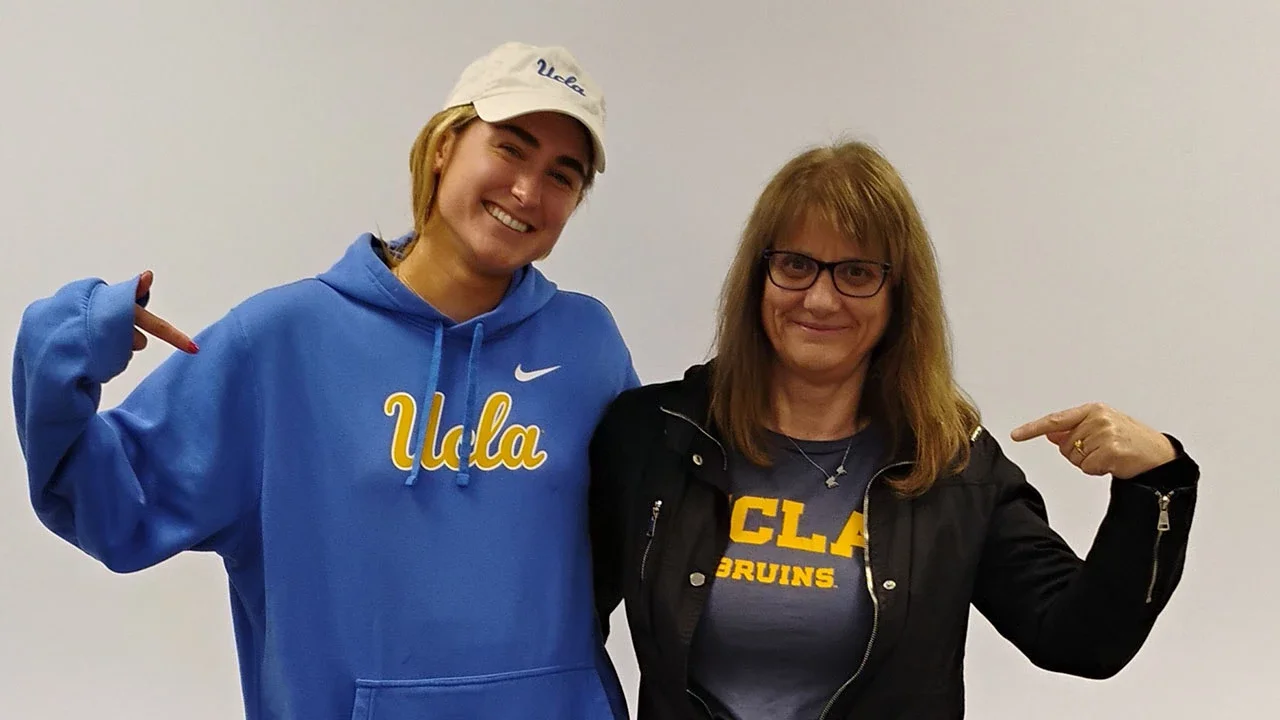
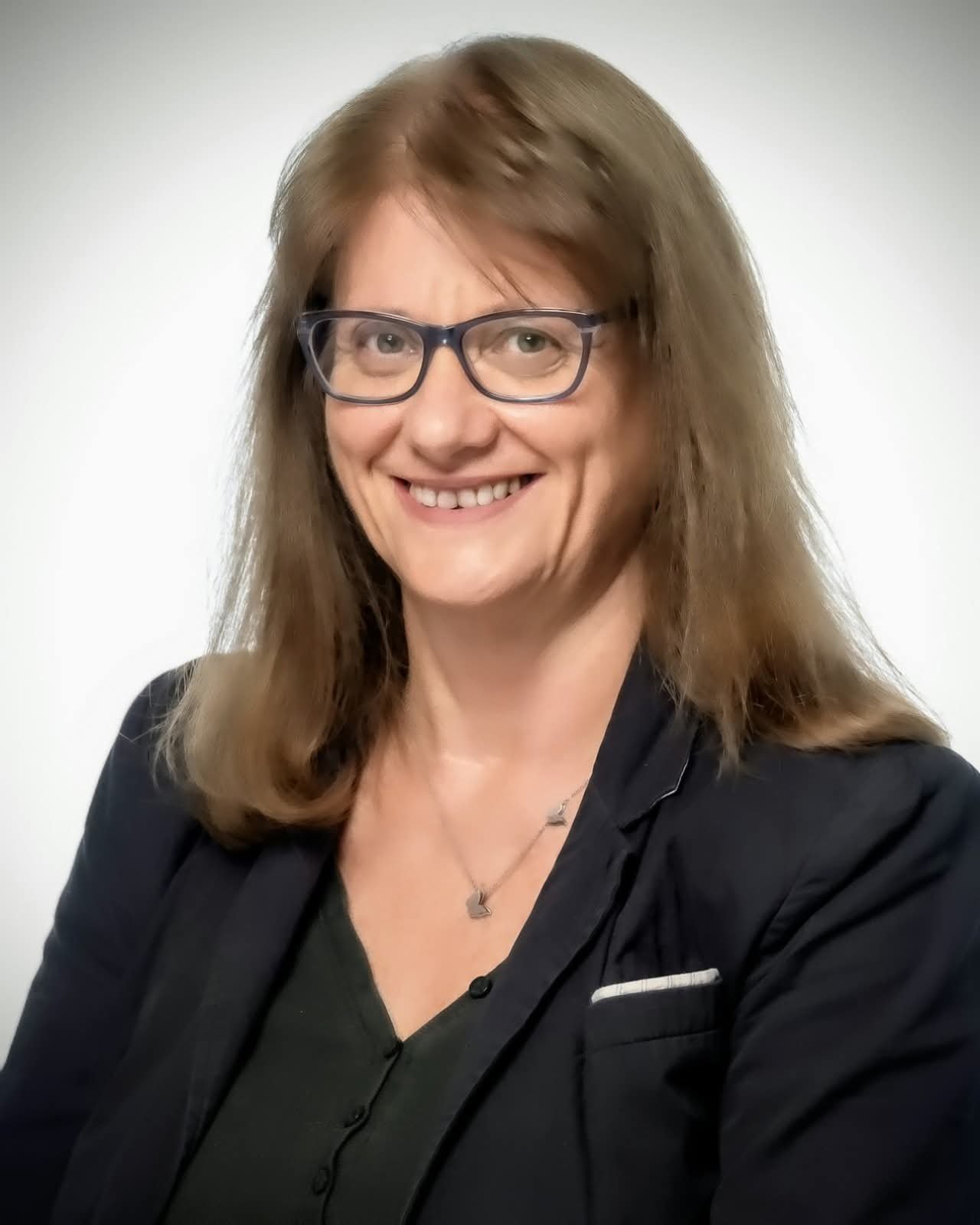
When Professor Paraskevi Papadopoulou reflects on her path from a first-generation UCLA undergraduate to a leading researcher and academic innovator at Deree–The American College of Greece (Deree-ACG), she describes it as a journey framed by curiosity, gratitude, resilience, and a lifelong devotion to teaching and learning. Over four decades, her work has spanned continents, disciplines, and generations of students, all united by a desire to understand the underlying structures of life and to help others discover the same joy in scientific inquiry.
UCLA in the early 1980s shaped her in profound ways. The campus was vibrant, diverse, and intellectually alive: a place where exceptional professors, dedicated teaching assistants, motivated peers, and deeply supportive friendships formed the ecosystem in which her academic identity grew. She recalls the atmosphere as one where interdisciplinarity and liberal education were encouraged long before they became mainstream ideals. From introductory biology, chemistry, math, and physics to advanced courses in cell and molecular biology, developmental biology, biochemistry, quantum physics, immunology, cancer biology, ecology and evolution, UCLA taught her to think critically, ask better questions, and appreciate how interconnected all scientific fields truly are. Equally significant were the extracurricular experiences that helped her develop leadership and communication skills. She often notes that these soft skills continue to guide her just as much as the rigorous scientific training she received. Her personal commitment to excellence, ethos, fair play, trust, respect, creativity, and collaboration aligns closely with the values and vision she absorbed early in life from her family, her birthplace in Piana, Arcadia, Greece, UCLA, NKUA, and Deree-ACG.
After completing her bachelor’s degree in Biology in 1983, personal circumstances brought her back to Greece, where she pursued her PhD at the National and Kapodistrian University of Athens (NKUA). The transition from UCLA’s highly structured, well-resourced, fast-paced scientific environment to the more variable research culture in Greece required adaptability. Yet it offered its own benefits. Her NKUA PhD supervisors, who had also been trained in the United States, brought a familiar mentality, while the differences in mentorship styles, research independence, and resource availability taught her creativity and scientific self-reliance. In experiencing both American and European systems, she gained the versatility that would later become one of her greatest strengths as an educator and research leader.
Her doctoral research marked a turning point in her scientific trajectory. She investigated the structural and self-assembly properties of fibrous proteins in complex biological tissues, particularly the chorion, or eggshell, of fish and insects. The work required an extensive combination of advanced microscopy, biophysical analysis, and computational biology. Using transmission and scanning electron microscopy, freeze-fracturing, and freeze-etching methods, she visualized the intricate fibrillar arrangements that form biological architecture at the microscopic level. Techniques such as laser-Raman and infrared spectroscopy, along with X-ray crystallography and diffraction, allowed her to explore the three-dimensional molecular architecture of the proteins. She complemented these approaches with PAGE electrophoresis and computational tools for sequence alignment, periodicity analysis, and protein structure prediction. This integrative methodology revealed fundamental principles of protein structure and function, deepening her fascination with how molecular systems assemble, interact, and ultimately give rise to complex biological forms.
That experience broadened into a multifaceted research identity. Over the years, her work expanded beyond structural biology and biophysics to include neurodegenerative diseases, genetic disorders, sexually transmitted infections, carcinogenesis, environmental health, and sustainability. She became increasingly involved in digital health innovation, artificial intelligence applications in biomedicine, and global studies of disease. Today, she is particularly energized by her role as a Senior Collaborator with the Global Burden of Disease Network and as a Strategic Research Advisor for the Digital Health Literacy & Policy Hub-an initiative of the Nanopoulos Foundation. She is also deeply committed to her work in the Erasmus+ project SDG4U, which integrates sustainability and innovative pedagogy in universities, with emphasis on promoting equality, developing a culture of peace, non-violence, and fairness at all levels. Yet despite the scope of her accomplishments, she insists that her proudest achievements are her students—those who have gone on to successful academic, medical, clinical and research careers, and who now lead labs, publish groundbreaking work, or bring scientific thinking into public policy and industry. Their success, she says, is the legacy that matters most.
Papadopoulou often notes that her desire to become a scientist did not stem from a single defining moment. Rather, she felt an instinctive pull toward discovery from a young age. But she vividly remembers the sense of wonder she experienced during long hours in dark microscopy rooms as an undergraduate and graduate student. The unfolding of the microcosm under TEM and SEM, particularly the moment she saw the helicoidal structure in fish chorion emerge clearly after troubleshooting a challenging experiment, filled her with a lasting sense of joy. Later, when she delivered her first lecture and watched the spark of understanding ignite in her students’ eyes, she knew that academia, with its blend of research and teaching, represented the full expression of her purpose.
Since joining Deree–The American College of Greece in 1992, she has contributed three decades of service to teaching, research, and academic leadership. She has taught a vast range of courses, mentored countless students, and helped shape the institution’s scientific direction. As Head of the Department of Science and Mathematics for nine years and Director of the Biomedical Sciences program for four, she oversaw major curricular reforms, laboratory upgrades, program development, and international collaborations. She helped the department evolve from a service unit into a thriving academic hub offering diverse science programs. She established the college’s first Biology minor to mainly support the Psychology program, and as Head of the department led the launch of the Environmental Studies program in 2010 through extensive laboratory renovation, and eight years later coordinated the development of the Biomedical Sciences program launched in 2020, served as a resource person for the Nutrition and Dietetics program, and proposed the Bioinformatics program, both scheduled to launch in 2026.
Her educational philosophy is grounded in the belief that students benefit most from the blend of American-style liberal education and European scientific rigor. She works to ensure that students graduate with strong technical preparation, broad intellectual grounding, and the ability to communicate effectively and ethically. She emphasizes the importance of scientific literacy, problem-solving, interdisciplinary thinking, and civic responsibility, arguing that today’s STEM graduates must be equipped to confront challenges ranging from environmental degradation, biodiversity loss, and global pandemics to the implications of artificial intelligence. Her international background allows her to contextualize science within different cultural frameworks, offering students examples from UCLA, Athens, and elsewhere in Europe to demonstrate how scientific knowledge and public health strategies must be adapted to local realities.
Her connection to UCLA remains strong even after four decades. She maintains friendships with former classmates and professors, participates in alumni networks, and continues to draw inspiration from the values that shaped her early academic life. She envisions future collaborations that would allow UCLA and Deree-ACG students to exchange research experiences and global perspectives, and the interview itself (conducted by a UCLA student, Elena Ponichtera, formally enrolled in her neurobiology course) is, in her view, a small but meaningful example of what such partnerships can achieve.
For biology students aspiring to international research careers, Papadopoulou stresses the importance of mastering scientific fundamentals while also developing communication skills, cross-cultural collaboration abilities, and resilience. She encourages students to embrace unexpected opportunities, learn additional languages, and understand that scientific careers rarely follow linear paths. Detours, she insists, often lead to the most transformative experiences.
As for the future of STEM education, she envisions a landscape that is increasingly global, integrated, and technologically enhanced. Virtual laboratories, international research projects, data-driven inquiry, and AI-powered analysis will play a growing role, but the heart of scientific training, hands-on experimentation, mentorship, and curiosity, must remain unchanged. She often invokes the wisdom of thinkers who have shaped her worldview: Richard Feynman, who emphasized humanity’s responsibility to learn and pass on improved solutions; Pythagoras, who argued for the transformative power of education; and Stephen Hawking, who reminded the world that science is driven not only by reason but also by romance and passion.
Professor Papadopoulou’s own career embodies all three ideals. It is a testament to a life spent pursuing knowledge, nurturing generations of scientists, and building bridges across cultures, disciplines, and institutions—a life in discovery that continues to evolve.
CONTACT INFO
+30 210 6009800 ext. 1589
