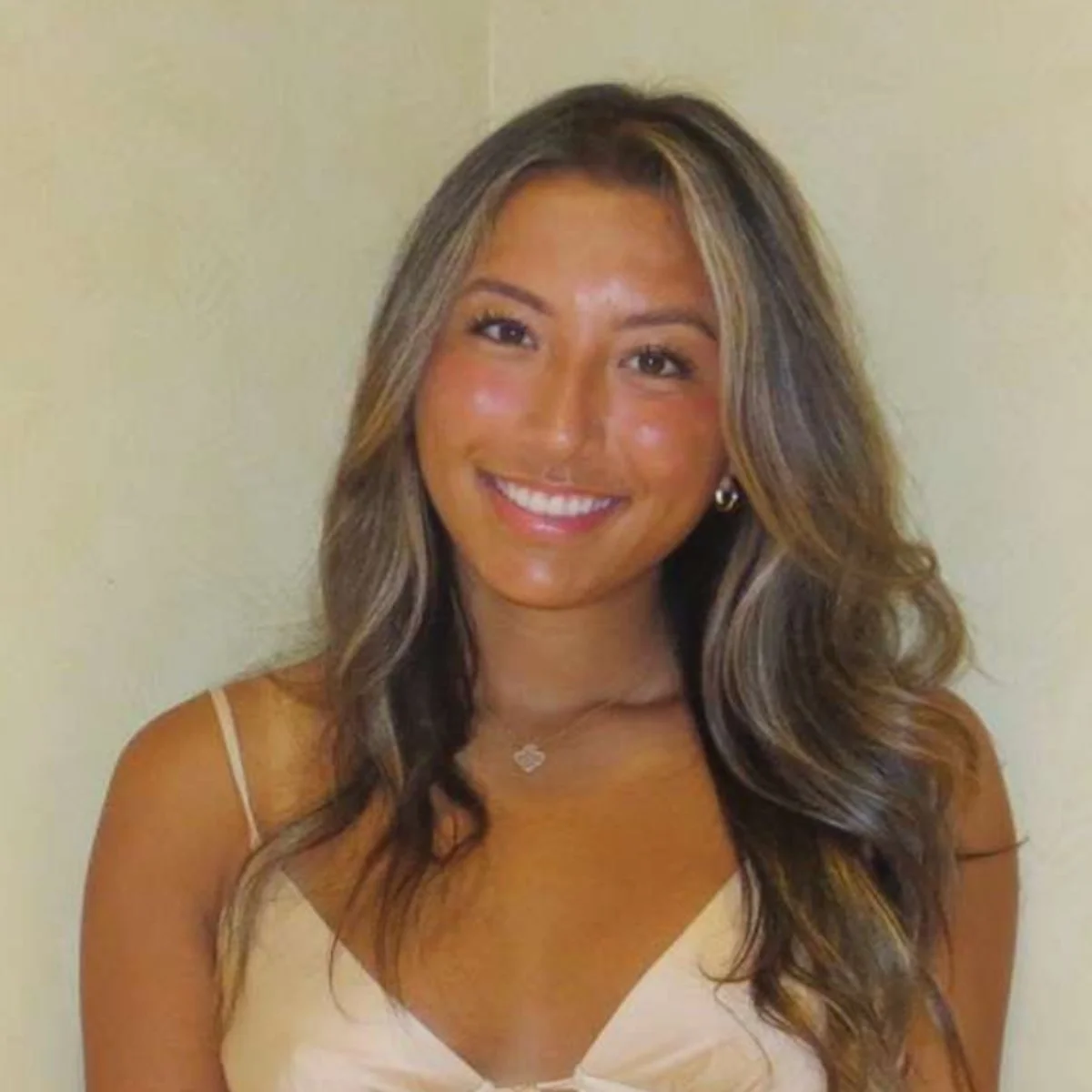
From Biochemistry to the Bar: When Scientists become Protectors of Innovation
For many college students pursuing a STEM degree, medical school seems to be the cookie-cutter path: take the MCAT, gain clinical experience, apply to medical school, and continue down this ostensibly pre-determined road. But, for UCLA alumna Erin Foley, the road less taken was the better fit.
As an eager 18-year-old freshman, San Diego native Foley came to UCLA certain of only this: she did not want to go to medical school. She’d rather enter the world of biotechnology or pharma than be “surrounded by sick people complaining,” as she so candidly expressed. However such disinterest in medicine wasn’t a rejection of science, but rather both a recognition and redirection that her interests lay elsewhere.
After graduating UCLA with a B.S. in biochemistry, Foley attended UC San Diego to pursue a Ph.D. in Biomedical Sciences. Foley explained that “the graduate life was amazing,” where she likened her first year of graduate school to “speedating.” “My first year we had the option to rotate around different labs, and at the end of the year pick one to stay at for the rest of your time,” she joyfully recalled. Foley’s heart settled on a lab in the Department of Cellular and Molecular Medicine, where she studied the endocytic clearance of triglyceride-rich proteins of the liver.
Foley greatly reminisced on her time at UCSD, and explained it wasn’t solely her research that defined her graduate experience, but the people, describing her labmates as “silly and fun.” In a serious environment, her peers were a breath of fresh air and cultivated an encouraging community that helped her navigate one of the most formidable aspects of graduate life: uncertainty. Foley clarified that unlike undergrad, there was no precise end date in her Ph.D. program. “You work when you’re ready,” she elaborated, and finish when your research is complete, the ambiguity being both stressful and freeing.
Come 2006, Foley had published many peer-reviewed papers and earned her doctorate degree with the plan to enter San Diego’s bustling biotechnology industry. Yet, external forces had a way of interfering: the 2008 recession. The nation’s economic decline threatened the very same industry Foley had her sights on, destabilizing everything she had envisioned for her career. Companies collapsed. Opportunities diminished. Her road suddenly became uncertain.
However, as she was working towards her Ph.D., Foley was also attending meetings for the Association for Women in Science, hosted at a local law firm. She explained how her doctorate program paid students to take additional courses, a patent law extension class being one of many. There, she met and networked with many attorneys with the same career trajectory: Ph.D.s in STEM who pursued careers in patent and intellectual property law. Through simply talking with other like-minded individuals, an idea began to take root: her scientific background can potentially be translated beyond the lab.
Such an idea blossomed and invigorated Foley, where she ultimately attended Georgetown Law. She firmly believed her background made her a unique candidate for law school, as she clarified that most applicants are “humanities majors straight from undergrad”; Foley was a 28-year-old with a Ph.D. and published research. This distinct perspective proved to be invaluable, as in patent law, scientific fluency isn’t optional. Foley explained that 90-95% of patent lawyers, specifically those who work in prosecution, have earned doctorate degrees.
Today, Foley is a partner at her own law firm, Foley Hoag LLP in Boston. Day to day, she secures patents from the U.S. Patent and Trademark Office (USPTO), where she closely works with inventors and helps translate their nuanced scientific discoveries into inventions for consumer use. She gleefully expressed that her days begin early around 7:30am, and is packed with calls with clients, document review, and the writing of applications. When calling inventors, she still “geeks out” about the scientific intricacies of their research, and writes detailed patent applications for their inventions, revises them, and ultimately corresponds with examiners in the patent office.
At the end of the day, Foley indignantly proclaimed that “first and foremost, I’m a scientist. I don’t really think of myself as a traditional lawyer.” Her journey truly underscores that her STEM background wasn’t merely something she left behind, but rather the foundation of training that catalyzed her successful career. Foley imparted that changing her career path multiple times was pivotal to discovering her true interests. “You just change course again,” she humbly advised, and traverse the road less taken.